

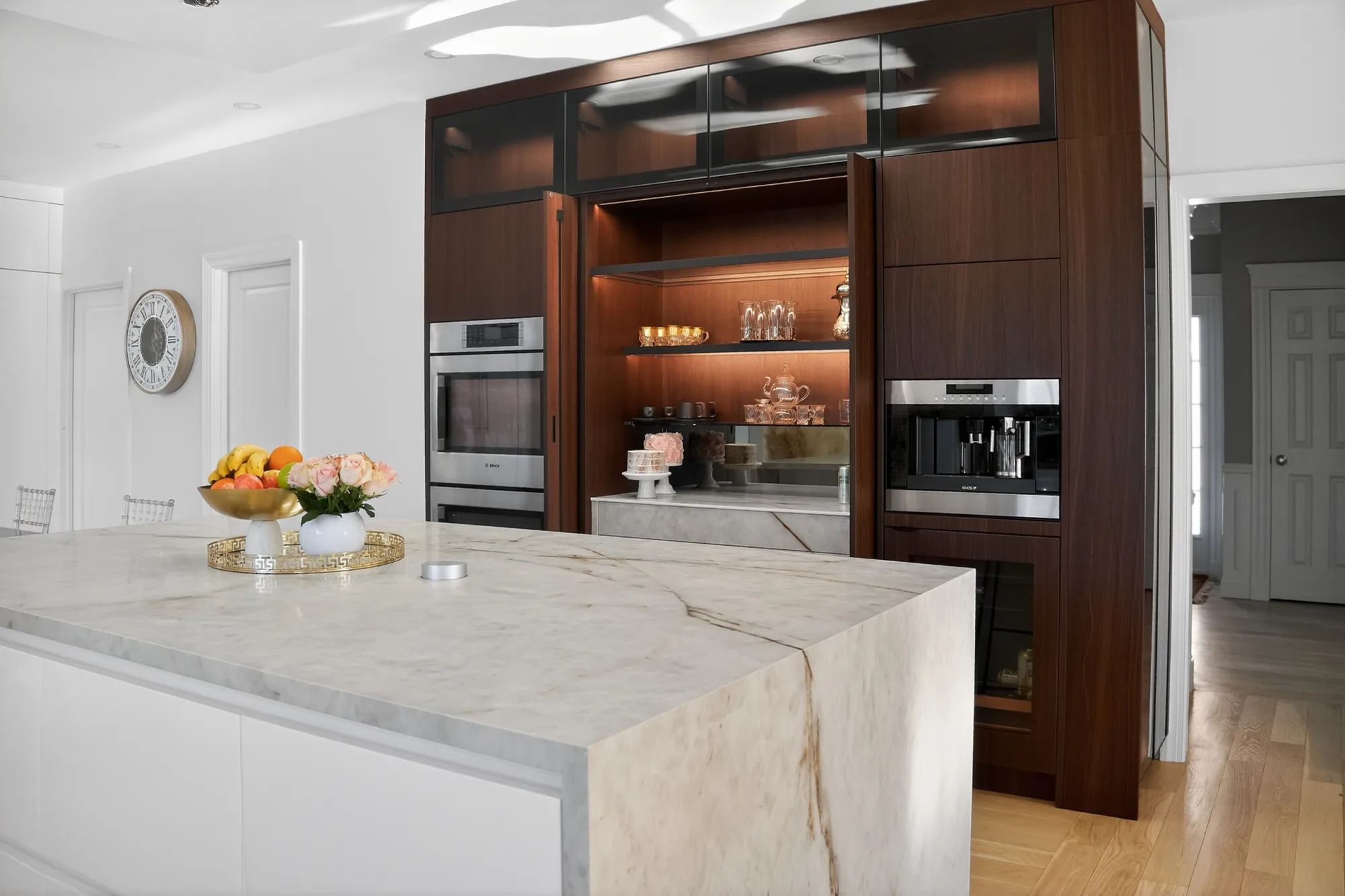
In many kitchens the bin is an afterthought: a freestanding can by the back door, or a cupboard under the sink shared with the plumbing and the cleaning products. Yet it is one of the most used parts of the room. Planning it as a proper pull-out, in the right place and at the right size, removes a small daily irritation for the life of the kitchen.
Put it where the waste is made
Most kitchen waste is made in two places: at the sink, scraping plates and rinsing containers, and at the prep area, peeling and trimming. The bin pull-out belongs between or beside those two, so that scraps go straight from the board or the plate into the bin without crossing the room. Next to the sink, opposite the dishwasher, is the most common position for good reason. The sink planning guide covers how the sink, the dishwasher and the bins work as one zone.
If the prep area is on an island, a second, smaller bin in the island for scraps can save a lot of walking. Avoid putting the bin where opening it blocks the dishwasher or a busy aisle.
Count the streams first
How many bins you need depends on how your household and your town sort waste. Count before you size:
- Trash. The general waste bin, usually the largest.
- Recycling. One container or several, depending on whether your town collects mixed or sorted recycling.
- Food scraps. A small bin for compost or a food-scrap collection, if you use one.
- Returnables. Some households keep a separate bin for bottles and cans.
Two or three streams fit in a single pull-out. Four usually need two pull-outs or one wide cabinet. Plan for the system you will use in five years, not just the one you use today.
The pull-out itself
A drawer, not a door
A bin behind a hinged door means opening the door and then pulling out the bin, two movements with a full plate in one hand. A bin system mounted on a full-extension drawer comes out in one movement, with the bins fully clear of the cabinet so they are easy to reach and to lift out. In European frameless cabinetry, drawer runners attach directly to the cabinet box, so the opening is the full width of the cabinet. The drawers or doors guide explains why drawers usually win below the worktop.
Opening with full hands
You often reach the bin with dirty or full hands. On a handleless kitchen, like the one pictured above, ask how the bin drawer opens: a recessed grip channel you can catch with a finger, or a touch or electric opening mechanism that releases the drawer with a push of the knee. Which mechanisms are available depends on the cabinet system and drawer hardware chosen for the project.
Size and lids
Choose bins large enough that they are not emptied twice a day, and small enough to lift out when full. Lids, or a cover that closes over the bins as the drawer shuts, help contain smells. Ask whether the bins can be lifted out individually and whether the liners are a standard size you can buy easily.
Keep it apart from the plumbing
The cabinet directly under the sink is tempting for the bin, but it is already crowded with the drain, the supply lines, the shutoffs and often a disposal or filter. A bin there competes with all of that and usually ends up small. A dedicated pull-out beside the sink cabinet tends to work better, and leaves the sink cabinet for cleaning supplies arranged around the pipes.
Small rooms and corners
In a compact kitchen, the bin can take a narrow pull-out in a run that would otherwise hold a tray store or a filler. It should not take the corner, where access is poor. The corner cabinet guide covers better uses for that space.
Questions to settle before the cabinetry is ordered
- How many waste streams do you sort, and how might that change?
- Where is waste made: sink, island, or both?
- Does the bin drawer clear the dishwasher and the aisle when open?
- How does the drawer open on a handleless front, and can you do it with full hands?
- Can the bins be lifted out, and do they take a standard liner?
You can see drawers and interior fittings in the complete kitchens at our Brookline showroom. Bring your layout to a complimentary design consultation at our showroom at 20 Boylston Street, Brookline, and we will place the bins with the sink and prep zones.