

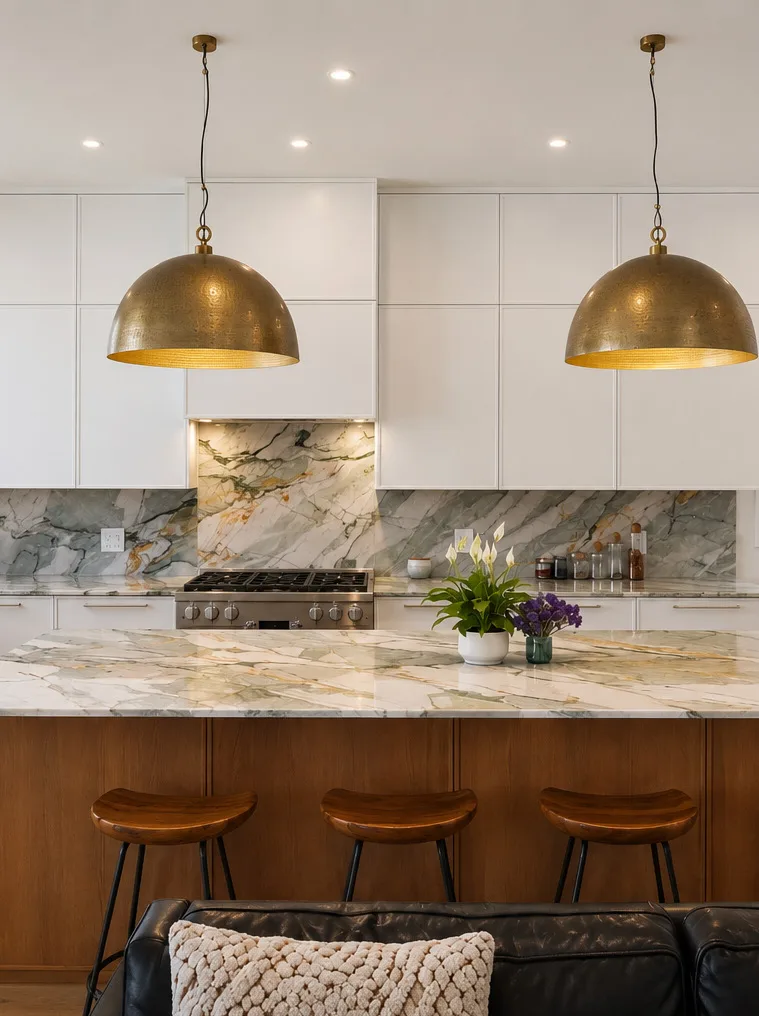
Every kitchen budget has a limit, and every kitchen project reaches a point where something has to give. The question is what. A simple test helps: how hard would this be to change in five years? Decisions that are built into the walls, the floor and the cabinetry are expensive to undo. Decisions that sit on top of them can be upgraded later at a fraction of the disruption. Spend on the first group. Be modest with the second.
Where it pays to spend
The layout
Where the sink, the cooktop and the refrigerator sit, how wide the aisles are and whether the island fits all shape every day in the kitchen. Moving any of them later means moving plumbing, gas, electrical and ventilation. Time spent on the layout, including a measured drawing and a careful look at circulation, is the best value in the project. The island sizing guide shows how much of that comes down to clearances.
Cabinet construction
The cabinet boxes, the hinges and the drawer runners carry the kitchen for decades. Doors can be refaced and handles changed, but a weak box or a failing drawer system means replacing the cabinetry. This is where construction and tolerance matter more than the finish on the front.
Drawers and interior fittings
Drawers below the worktop, fitted pantry storage and well-planned corners make the kitchen easier to use every day. They are also hard to add after the fact, because they depend on the cabinet sizes chosen at the start.
Everything behind the walls
Wiring, plumbing, ventilation ducts and blocking for wall cabinets are cheapest while the walls are open. Adding an outlet, a circuit or a duct after the slab backsplash is installed is disruptive and costly. These trades sit outside the cabinetry scope, so make sure each one has an owner and a budget line.
The ventilation
A hood that does not clear the air is a daily problem, and fixing a poor duct route later means opening ceilings. Settle the hood and its duct with the cooktop.
Where it is reasonable to save
- Decorative lighting. Pendants can be changed in an afternoon. Plan the wiring and positions now, and choose the fixtures you can afford.
- Handles and pulls. Easy to upgrade later on a framed or handled door, as long as the hole positions are planned.
- Some appliances. A mid-range model chosen to the right dimensions can be replaced later with a better one of the same size. Choose the size and the integration carefully even if the brand is modest.
- Accessories. Racks, organizers and inserts can be added over time.
- Secondary surfaces. Not every wall needs the hero material. A strong worktop and backsplash on the main wall can carry a room where other walls are painted.
What actually moves a cabinetry budget
For DOCA kitchens, four things account for most of the difference between one project and another. The amount of cabinetry, driven by the run length and the number of tall units rather than the room’s square footage. Whether the work continues into adjacent rooms, such as wardrobes, bathrooms or living systems. The finish and surface selections, where lacquer, veneer, glass and large-format porcelain sit at different levels. And the degree of appliance integration, because panel-ready and fully concealed appliances add cabinetry that a freestanding appliance does not.
Each of those is a lever. A shorter run of tall units, fewer finishes, a mix of a premium finish on the island and a quieter one on the perimeter, or freestanding appliances where integration matters less: each changes the number without changing the layout. The materials page shows the finish families, and the questions page sets out what sits inside the cabinetry scope.
Say the range early
A budget range shared at the first conversation is not a way of qualifying anyone out. It keeps the design on kitchens you would actually build, and it decides which materials, which appliance strategy and which scope get discussed. A kitchen designed without a number tends to be redesigned once the number arrives.
Questions to settle early
- Which decisions are built into the walls, and which can be changed later?
- Is the budget for cabinetry separate from construction, appliances and surfaces?
- Where would a premium finish show most, and where would a quieter one do?
- Which appliances need to be integrated, and which can stand free?
- Who owns each trade and budget line outside the cabinetry?
Our kitchen collections show how finish and integration choices change a room. Bring your budget range and your priorities to a complimentary design consultation at our showroom at 20 Boylston Street, Brookline. We will show you where the money does the most work.